Your Future Gaming Buddy: The Sublimation Guide for Digital Creativity
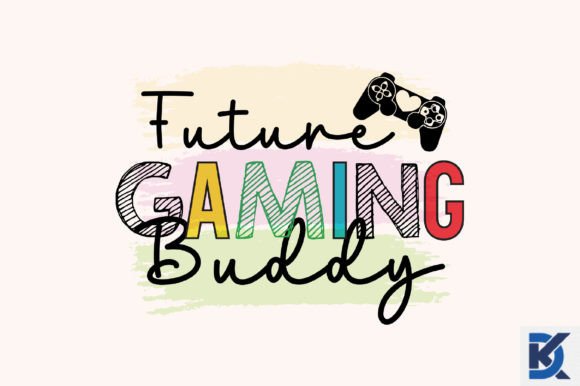
Imagine capturing the essence of your favorite game—a charismatic character, a powerful emblem, or a breathtaking scene—and transforming it into a tangible piece of your everyday life. This is the magic unlocked by digital clip art, specifically designs tailored for a process known as sublimation. For creators, gamers, and hobbyists, a "Future Gaming Buddy" in the form of a high-quality PNG file is more than just an image; it's a key to a universe of personalized projects. This article will guide you through the purpose, significance, and incredibly practical world of using premium digital artwork for sublimation and beyond, explaining it from the ground up for both beginners and seasoned crafters.
What Is Digital Clip Art for Sublimation?
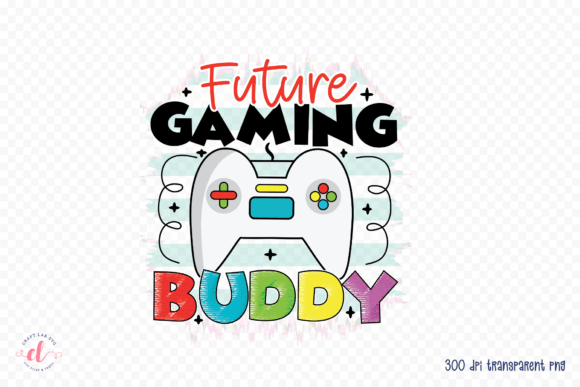
Let's start with the basics. The product described—a single PNG file at 300 DPI with a transparent background—is a specific type of digital asset designed for creative manufacturing. PNG (Portable Network Graphics) is a file format that supports high quality and transparency, meaning the image has no solid background and can be placed seamlessly onto other designs. The 300 DPI (dots per inch) resolution is a professional standard for print, ensuring crisp, clear details without pixelation when transferred to physical surfaces.
This digital artwork is your "Future Gaming Buddy" because it becomes a versatile partner in your creative endeavors. Unlike a physical sticker or pre-made product, this file is a raw ingredient. Its purpose is to be applied, through various printing methods, to blank items to create something uniquely yours. The core process highlighted here is sublimation, a printing technique where specialty inks are heated to turn into a gas, bonding permanently with polyester-based materials. The result is a vibrant, durable design that won't peel or crack.
The Significance and Practical Relevance in Modern Creativity
In today's culture of personalization and niche fandoms, especially within gaming communities, the ability to create custom merchandise holds tremendous significance. It bridges the digital world of games with our physical environment. This isn't just about commerce; it's about expression, identity, and community. A gamer can wear a t-shirt featuring a beloved esports logo they designed, gift a mug with a classic game sprite to a friend, or decorate their gaming space with framed artwork of an iconic scene. The digital file makes this accessible without requiring advanced graphic design skills.
Its practical relevance extends into small business, education, and daily hobbies. For a small online shop, such files are the inventory—no physical storage, no shipping costs, just instant digital downloads that customers use to make their own products. In educational settings, like a school club, students can use these designs to learn about digital fabrication, marketing, and basic business principles by creating and selling custom items. For the daily hobbyist, it’s a gateway to affordable, satisfying craft projects that yield professional-looking results.
Common Misunderstandings Clarified
A few key points from the product description address common assumptions and are crucial for a broader understanding.
- "Digital Instant Download": You are purchasing the file itself, not a physical product. You receive it immediately after purchase, but the "making" part is your next step.
- "NO cutting files included": This specifically means the file is not formatted for machines like Cricut or Silhouette that cut vinyl. It is purely for printing, not for cut-out shapes.
- "Colors may vary": This is a vital reminder. Your monitor displays colors in light (RGB), while printers use inks (CMYK). The final product's color can differ based on your printer, inks, substrate, and settings. Always test first.
- "Transparent background": This allows you to place the image anywhere without a white or colored box behind it. It's essential for professional-looking overlays.
A Universe of Creative Projects: From T-Shirts to Stickers
The listed possibilities—sublimation products, cards, artwork, scrapbooks, t-shirts, pillows, bags, mugs, stickers—are not just ideas; they are actionable projects. Each represents a different application method, showcasing the file's flexibility.
For sublination on fabrics and hard surfaces, you'd need a sublimation printer, inks, and blanks (like a polyester t-shirt or a coated mug). The PNG is printed onto special transfer paper first, then heat-pressed onto the item. For regular printing, you could use a standard inkjet or laser printer to put the design on cardstock for greeting cards, onto photo paper for framed artwork, or onto sticker paper for adhesive decals. Waterslide printing is another method for applying designs to complex surfaces like models or gadgets, using waterslide decal paper.
An example to understand this naturally: You buy a "Future Gaming Buddy" PNG of a minimalist controller design. You could:
- Use sublimation to put it on a white polyester pillow for your gaming chair.
- Print it on cardstock to create "thank you" cards for your streaming community.
- Print it on adhesive vinyl paper to make stickers for your laptop or water bottle.
- Print it on high-quality paper, frame it, and hang it in your office.
The same single file fuels all these distinct outcomes.
How This Fits into Technology and Modern Workflows
This model is a direct product of digital convergence and the maker movement. It fits perfectly into a tech-enabled workflow: digital storefronts (like Etsy) sell the file, creators download it, and then use increasingly accessible home technology (sublimation printers, heat presses, quality inkjets) to manufacture the final product. It democratizes design and small-scale production. For a graphic designer, creating and selling such PNG files can be a business itself. For a consumer, it bypasses the traditional manufacturing chain, allowing for ultra-niche, on-demand creation that large companies wouldn't service.
It also emphasizes the importance of file knowledge. Understanding what a 300 DPI PNG with transparency is—and isn't—becomes a practical digital skill. It clarifies the difference between vector files (for scaling infinitely) and raster files like PNGs (best used at their intended high resolution), and between files for printing versus files for cutting.
Building a Broader Understanding: The Ecosystem of Digital Assets
Seeing this single PNG file as part of a larger ecosystem is helpful. It exists alongside other digital asset types: SVG files for cutting, JPGs for general use, patterns, and full design templates. Each serves a different creative purpose. Your "Future Gaming Buddy" is optimized for one primary purpose (high-quality print transfer) but is adaptable enough to spill over into adjacent methods. This interconnectedness empowers creators to mix and match assets from different sources to build complex, unique projects.
Conclusion: Your Key to Personalized Creation
A "Future Gaming Buddy Sublimation" PNG file is far more than a picture on your computer. It is a license to create, a tool for personalization, and a bridge between your digital passions and physical world. By understanding its specifications—the high resolution, the transparent background, the intended printing methods—and acknowledging its limits—the color variances, the digital-only nature—you unlock its full potential. Whether you're a gamer wanting to wear your hobby, a parent making custom gifts, a small business owner building a product line, or a teacher introducing practical digital skills, this form of digital clip art is a powerful, accessible resource that fits neatly into modern creative life. Start with one file, and you might just find your future in making.